Step by Step to Do Mae Ukemi: Essential BJJ Breakfall Techniques
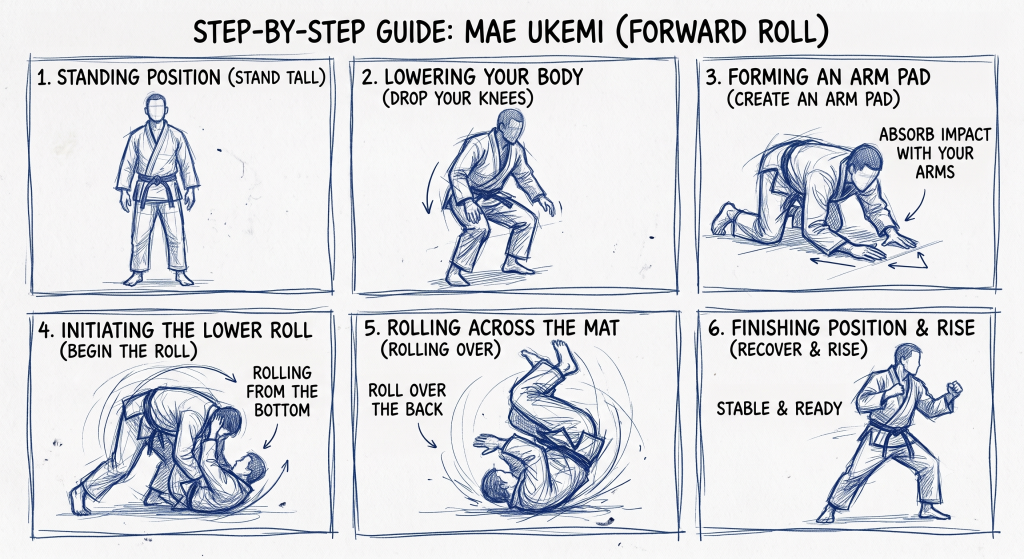
Mae ukemi is the forward rolling breakfall technique practiced in BJJ and other Japanese martial arts to safely absorb energy during throws and falls. This fundamental skill allows practitioners to protect themselves from injury by distributing impact across the body rather than absorbing it at a single point.
To perform mae ukemi correctly, you step forward, place both hands on the ground inside the line of your front foot, form a strong circular shape with your arms, and roll diagonally across your back from wrist to elbow to shoulder while keeping your head tucked. Learning the proper body positioning and sequencing of movements ensures both safety and effectiveness during practice.
Whether you are new to BJJ or refining your technique, understanding the principles behind ukemi will transform how you approach training. The emphasis on avoiding injury through proper falling techniques makes this one of the first lessons taught in the dojo and a fixture in every session. Your ability to execute clean, confident forward rolls will directly impact your progress in throws and your overall safety on the mat.
Fundamentals of Ukemi in BJJ
Ukemi forms the foundation of safe BJJ practice by teaching you how to absorb impact when thrown. The techniques protect your body from injury while building the confidence needed to train effectively with partners.
Meaning and Importance of Ukemi
Ukemi translates to “receiving body” in Japanese, referring to your ability to receive a fall safely. The term comes from uke (to receive) and mi (body or self), making it an active skill rather than passive tumbling.
Jigoro Kano emphasized that mastering ukemi is imperative before practicing throwing techniques. This foundational approach protects you from the forces generated during throws, which can reach up to 12 times your body weight in 0.2 seconds.
The core purpose is spreading impact force across a larger surface area of your body. Instead of absorbing shock at a single point like your elbow or shoulder, proper breakfalls distribute the energy across your back, side, or arm. This principle prevents serious injuries to joints and your head while allowing you to train safely.
Role of Ukemi in Beginning BJJ
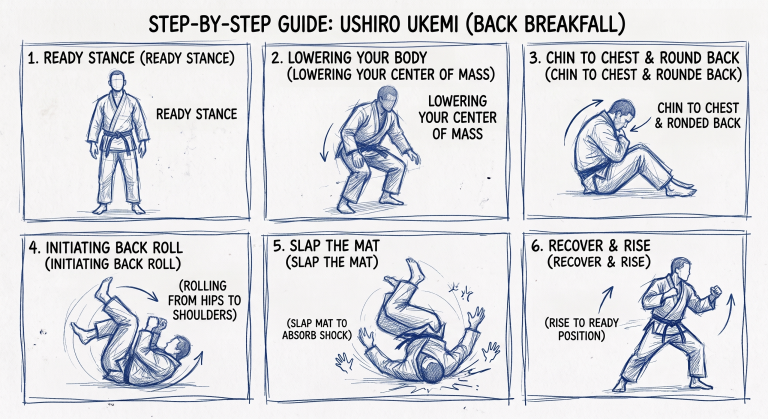
Rear ukemi is typically the first technique taught in beginning BJJ because backward falls occur most frequently during grappling. You must develop these skills before attempting throws or randori (free practice).
Learning breakfalls builds your proprioception, which is your body’s awareness of its position in space. Through repeated practice, your muscles develop automatic responses that activate without conscious thought. This muscle memory becomes essential when you’re thrown unexpectedly.
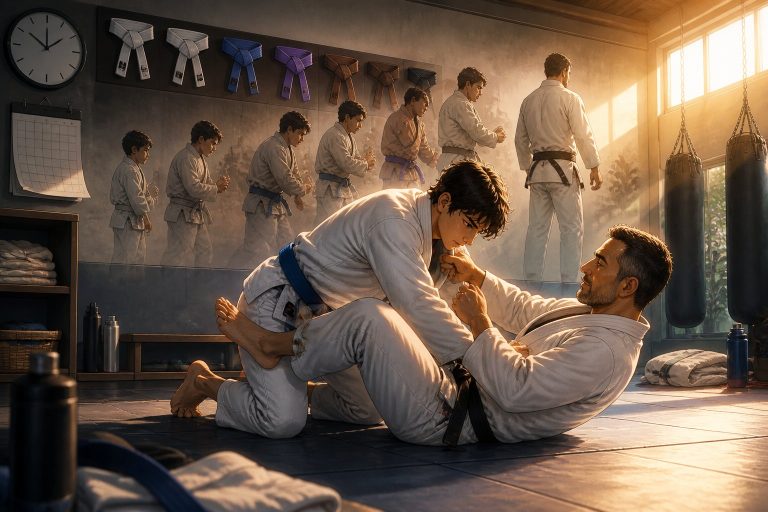
Ukemi also strengthens the partnership between you and your training partners. When both practitioners trust each other’s falling ability, training becomes more productive and enjoyable. Your instructor will guide you through progressive drills, starting low to the ground and gradually increasing height and speed as your technique improves.
Mastering Mae Ukemi and Forward Rolling Breakfalls
Mae ukemi protects you when momentum carries you forward during throws or when you need to disperse energy through a controlled roll. The technique requires precise body positioning, proper mat striking, and progressive training to build confidence and muscle memory.
Preparing Your Body for Mae Ukemi
Your body needs specific preparation before attempting forward rolling breakfalls. Start with neck mobility exercises by doing gentle rotations and tilts to ensure your cervical spine can handle the tucked position required throughout the roll.
Wrist flexibility is critical because your hands initiate contact with the mat. Perform wrist circles in both directions and gentle extensions to prepare the joints for impact. Your shoulders also need attention through arm circles and dynamic stretches.
Hip mobility exercises help you achieve the diagonal roll pattern that defines proper mae ukemi. Practice hip rotations and leg swings to loosen the lower body. Your core muscles stabilize your spine during the roll, so include planks and hollow body holds in your warm-up.
Test your ability to tuck your chin to your chest before rolling. This position protects your head and neck throughout the technique.
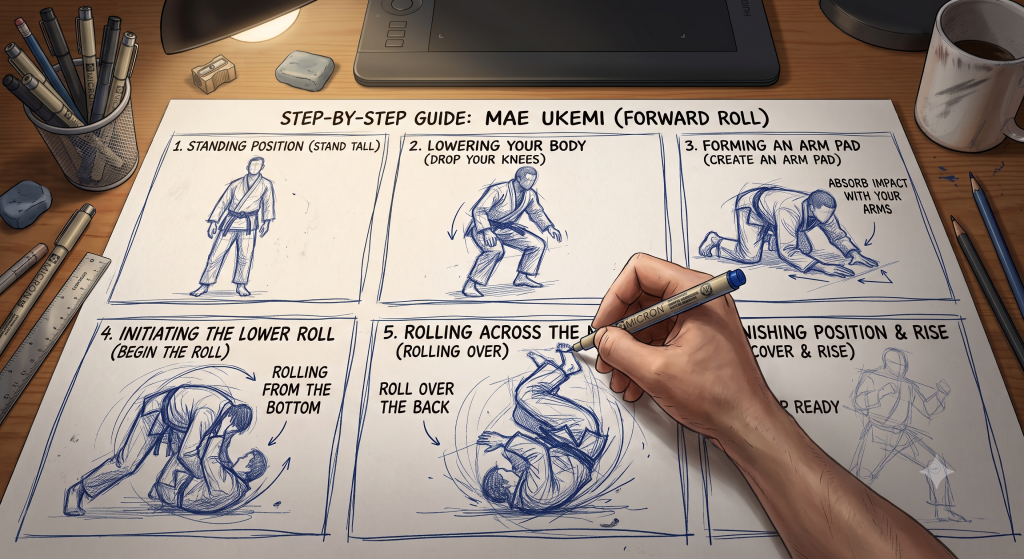
Step-by-Step: How to Do Mae Ukemi (Forward Roll Technique)
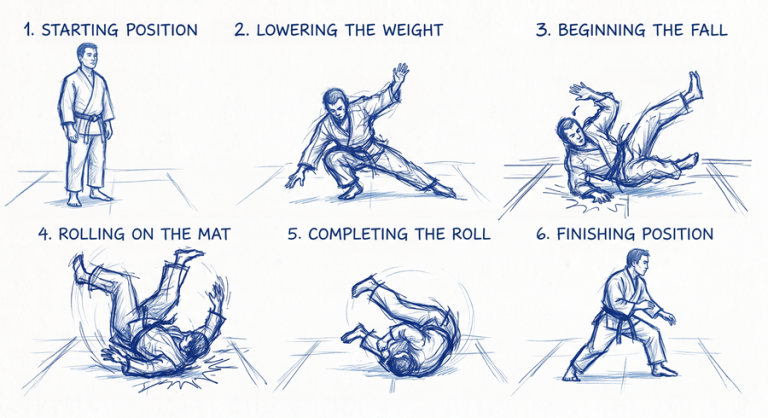
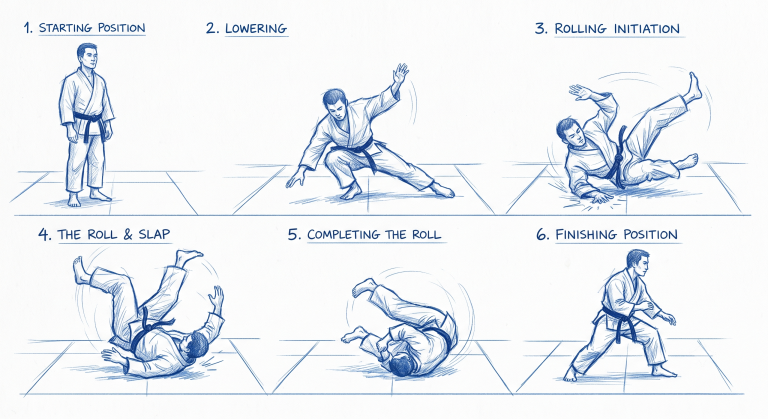
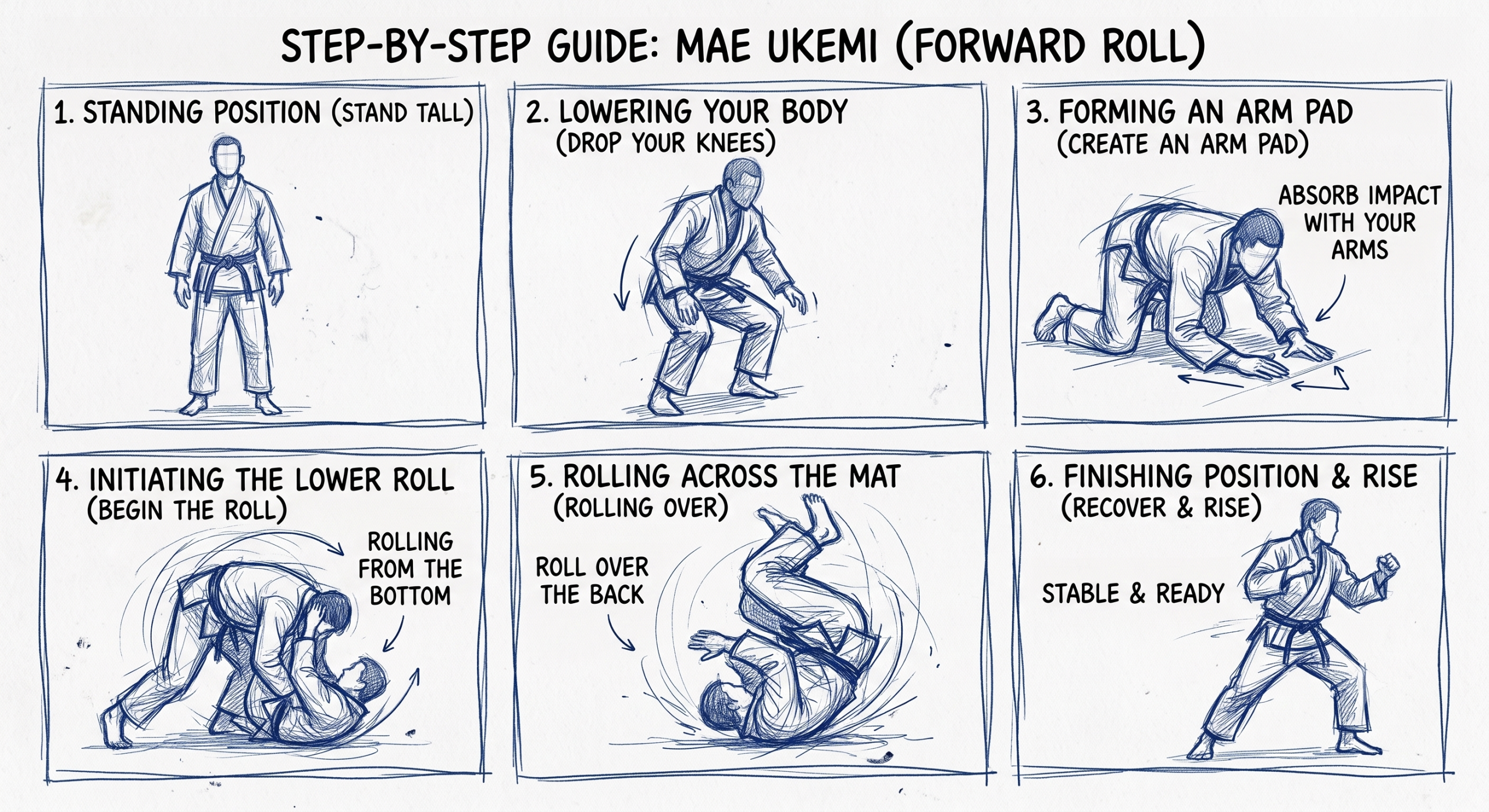
1. Starting Position: Stand with your feet shoulder-width apart and knees slightly bent. Relax your shoulders and keep your arms loose at your sides. If you are right-handed, step forward with your right foot; if left-handed, use your left foot.
2. Hand Placement: As you begin to lower yourself, place both hands on the mat just inside the line of your leading foot. Your arms should be rounded, forming a gentle arc. This shape is crucial to guide your body into a smooth roll and to protect your head and neck.
3. Chin Tuck: Tuck your chin tightly to your chest, as if you are holding an apple under your chin. This is essential for protecting your head and neck from hitting the mat during the roll.
4. Initiate the Roll: Push off gently with your back foot and allow your body weight to move forward. The roll should start at the wrist and forearm of your leading arm, travel across your shoulder, and diagonally down your back to the opposite hip. Your spine should not touch the mat directly; instead, the roll follows the curve of your back muscles.
5. Body Position During Roll: Keep your body tightly rounded, maintaining the arc formed by your arms and back. Avoid straightening your legs or arms during the roll. Your knees should bend naturally as you move through the motion.
6. Finish the Roll: As you complete the roll, your feet should land flat on the mat, and your momentum should carry you into a low squat or kneeling position. Your non-rolling arm should extend and slap the mat at a 45-degree angle to help disperse the impact.
7. Breathing and Relaxation: Exhale as you roll, keeping your body relaxed but controlled. Tension increases the risk of injury, while relaxation allows the energy to dissipate safely.
Practice this motion slowly at first, focusing on smoothness and control. As your confidence grows, you can increase speed and height. For additional details on BJJ training and equipment, visit bolojiujutsu.com.
Wearing the right gear is also important for safety and comfort. Consider the best rash guards for BJJ, which you can find reviewed here.
Proper Method to Strike the Mat
The mat strike in forward rolling breakfall happens as your feet make contact with the mat at the end of your roll. Your non-rolling arm extends and slaps the mat with your palm flat and fingers spread.
Strike with your entire forearm and hand simultaneously, creating a loud slapping sound. The arm should be at approximately 45 degrees from your body. This angle maximizes surface area contact and force dispersion.
Key striking points:
- Use your whole arm, not just your hand
- Keep your palm flat against the mat
- Generate force from your shoulder and core
- Time the strike as your feet touch down
- Maintain the slap angle consistently
Avoid weak or hesitant strikes. A half-hearted slap fails to absorb impact energy and increases injury risk.
Progression: From Stationary to Dynamic Forward Ukemi
Your training should follow a structured progression to build competence safely. Start from a kneeling position where you’re already low to the ground. Practice the rolling motion repeatedly until the diagonal path becomes automatic.
To perform mae ukemi from kneeling, begin by kneeling on a soft mat. Tuck your chin tightly to your chest to protect your head and neck. Extend one arm diagonally across your body, palm facing down and fingers spread, as if you are reaching toward the opposite knee. Shift your weight forward, letting your extended arm and shoulder make the initial contact with the mat. As your body follows, round your back and continue to roll diagonally across your upper back toward your opposite hip. Keep your legs relaxed, allowing your momentum to carry you through the roll. Finish by absorbing the energy with your arm and side, then return to a stable kneeling or sitting position. Repeat this motion on both sides to build coordination and confidence.
Move to a squatting position once kneeling rolls feel natural. The slightly higher starting point increases momentum but remains manageable. Focus on maintaining your tucked chin and rounded body shape.
Progress to standing mae ukemi only after mastering the lower positions. Begin with slow, deliberate movements before increasing speed. Your body needs time to develop the proprioception required for fast, dynamic rolls.
Practice both right and left side rolls equally. Most students favor one side, but bolojiujutsu.com techniques demand bilateral proficiency. Dedicate extra repetitions to your weaker side until both feel equally comfortable.
Add partner-assisted drills once your solo work is solid. A training partner can guide your roll or create realistic throwing scenarios. Dynamic mae ukemi during actual throwing practice represents the final progression stage. For more on essential gear for BJJ, check out this guide to the best rash guards for BJJ.