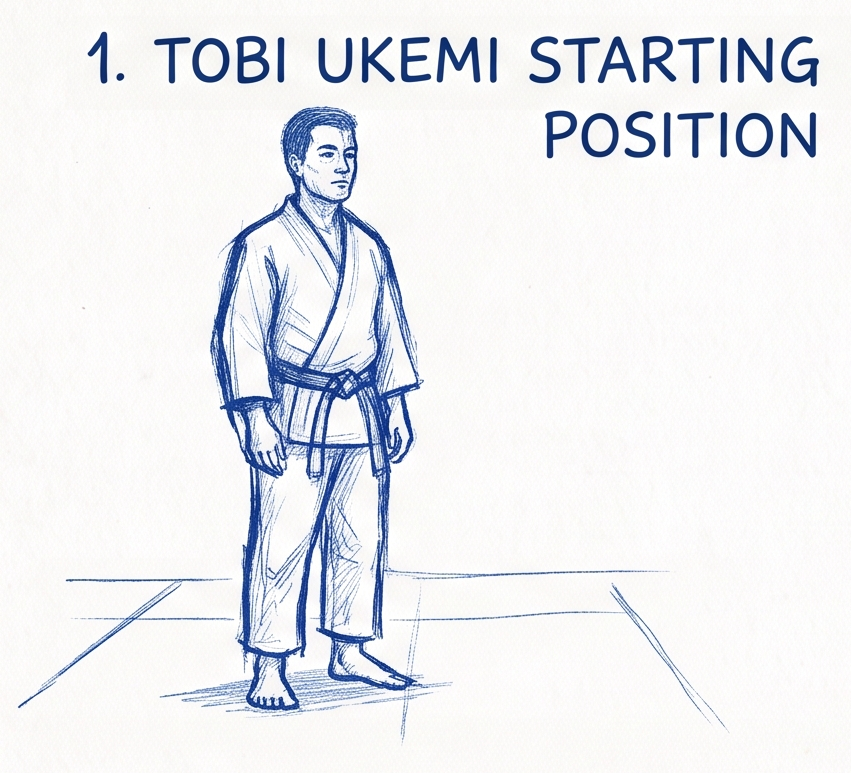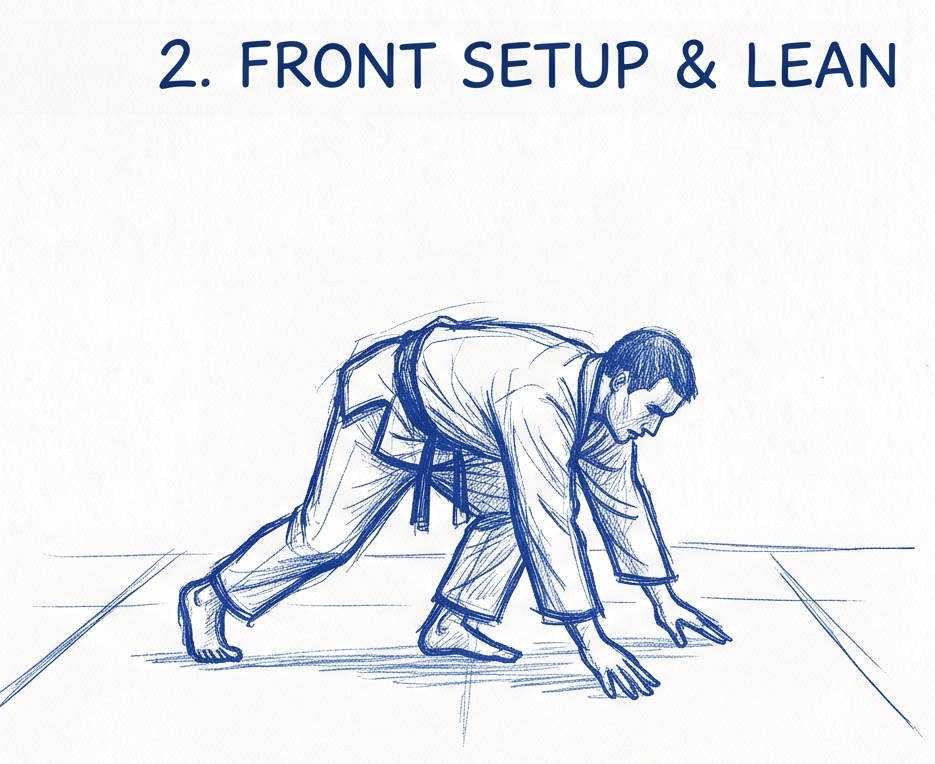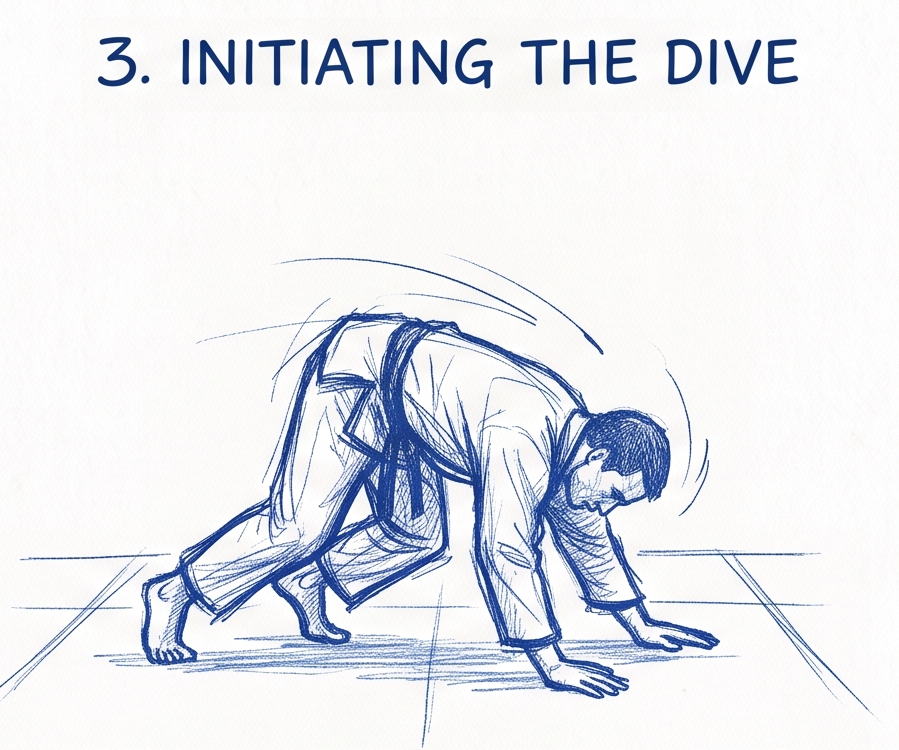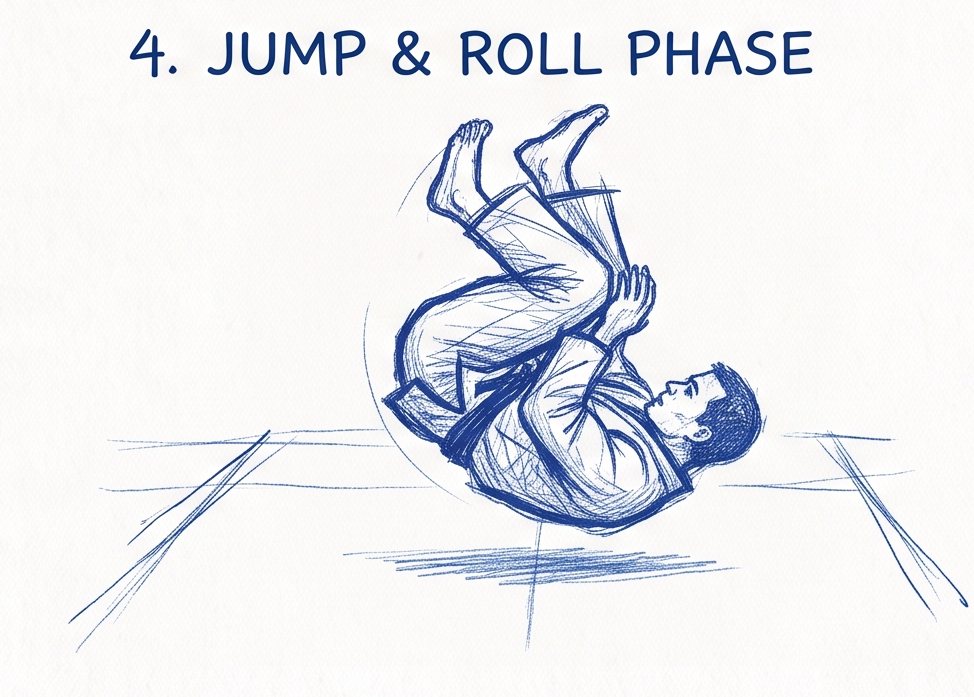
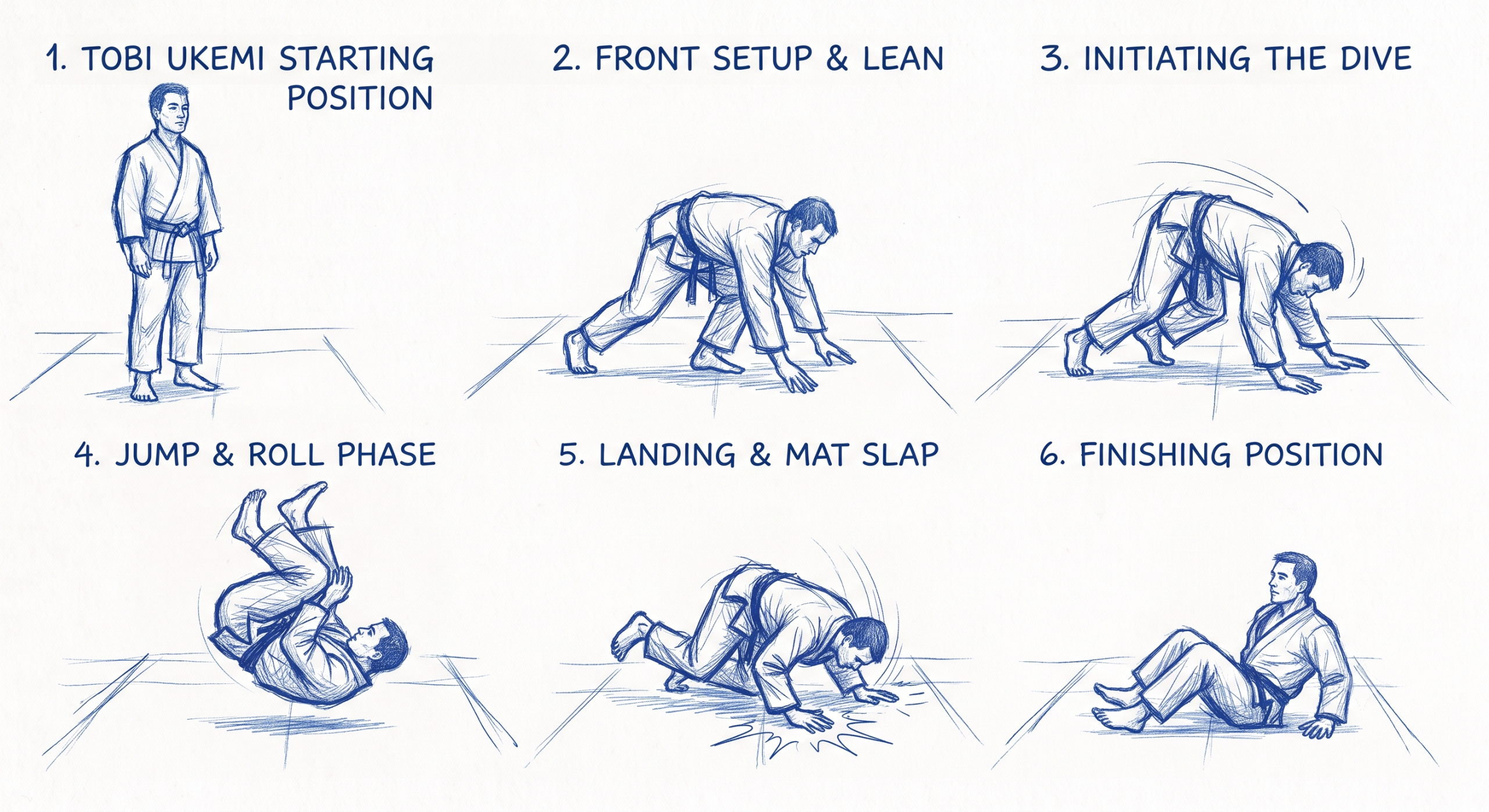
How To Do Tobi Ukemi in BJJ: Mastering Safe High Falls
You can learn tobi ukemi in BJJ by first nailing down the basics of ukemi and breakfalls, then slowly working your way up to the soft high fall in a safe, controlled space. Start by drilling tucked-head rolls, arm slaps, and hip rotation—stuff you’ll need to flip and land flat, spreading the impact around your body instead of taking it all in one spot.
Get those fundamentals solid on mats, ideally with a coach or a good training partner who can guide you through gentle throws and tosses. Don’t rush—move up to higher, faster falls only when you’re totally comfortable with the standard breakfalls, keeping your head safe and arms ready to absorb force.
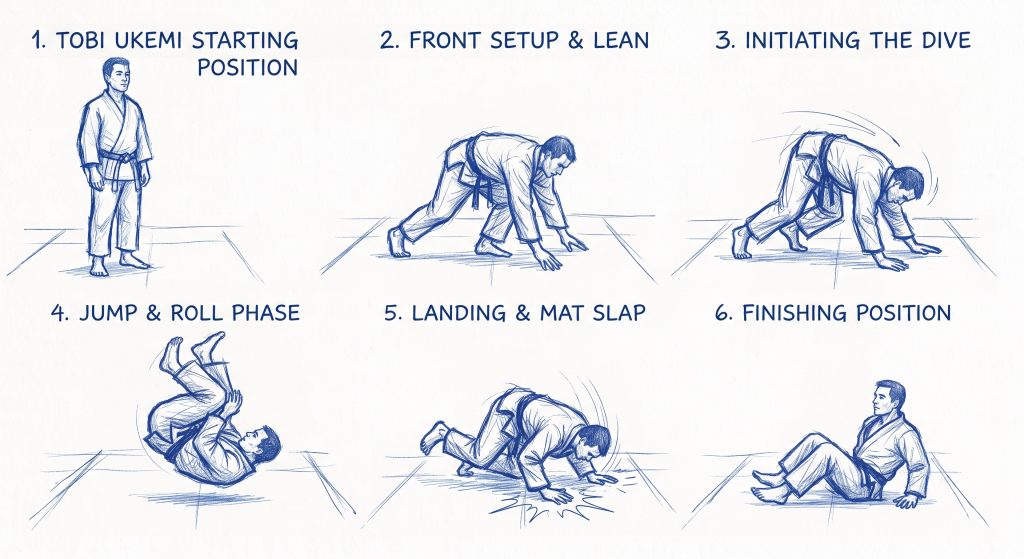
This article digs into the mechanics of breakfalls, how to safely progress to mid-air placements, and drills to transition from the basics to the tobi ukemi you’ll see in BJJ sparring and throws. I’ll be honest: it took me about six months of regular practice before I could do this with real confidence. So, if you’re struggling early on, you’re not alone.
Fundamentals of Ukemi and Breakfalls
Protecting your head, neck, and joints comes down to spreading impact and using well-timed slaps or rolls. Drill the basics: keep your chin tucked, and work with a partner who controls the force as you move from rolls to higher throws. It’s not glamorous, but it’s the foundation.
Principles of Falling Safely
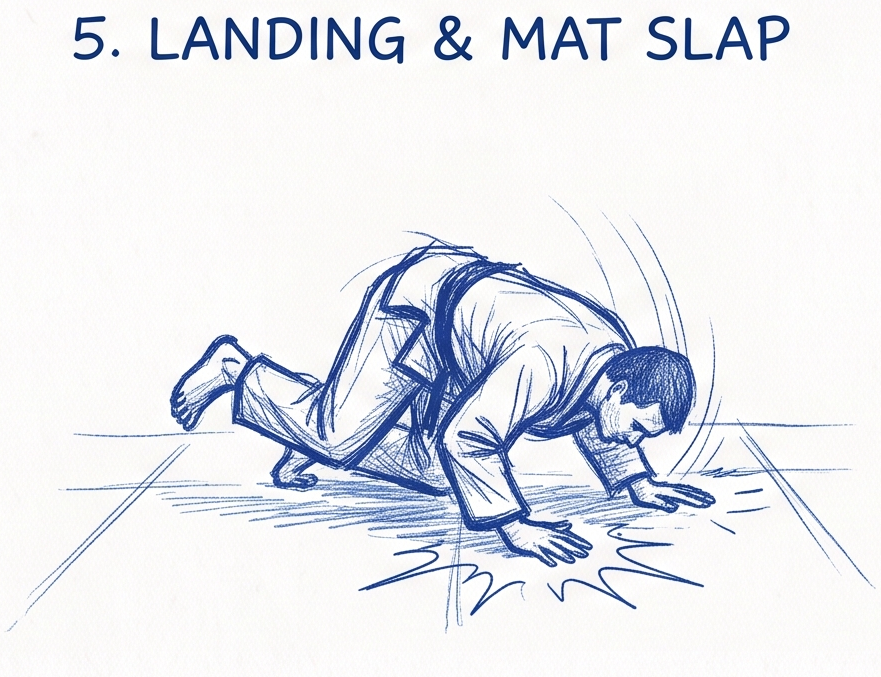
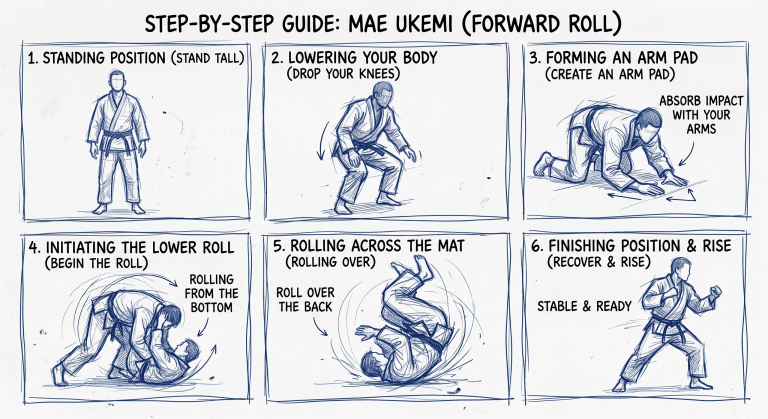
Always keep your chin tucked and eyes open—seriously, don’t let your head touch the mat. Use your arms to slap the mat right as you land; that slap spreads out the force along your shoulder and forearm, not into your head or wrist. If you’re falling forward, roll over your shoulder (think forward roll or mae ukemi) so you don’t end up face-planting or jamming your hands.
Keep your body loose, not stiff. A rounded, relaxed shape takes impact way better than locking up. Move your hips and shoulders together so big muscle groups take the load. Practice barefoot on padded mats, and honestly, do lots of reps—10, 20, whatever it takes for it to feel automatic.
Role of Uke and Tori in Training
When you’re uke, your job is to fall safely. Tori’s job? Controlled entries and throws, nothing wild. Uke should always signal when they’re ready and keep their limbs loose—don’t fight the throw. Tori should build up force gradually, starting with gentle pushes, then moving to more structured throws, so uke can build up confidence without getting surprised.
Communication is huge: agree on speed, height, and which ukemi you’re drilling (backward, sideways, whatever). When you’re training more aikido-style ukemi, uke practices receiving and standing back up, while tori helps guide, not muscle, uke’s path.
Progression from Basic Rolls to High Falls
Start with forward rolls and soft breakfalls from your knees. Once that’s comfortable, move to full forward breakfalls and backward rolls. Make sure you’ve got the mechanics of zenpō kaiten (forward rolling ukemi) and sokuhō ukemi (hip-based falls) down before you start upping the height. Repeat low throws until your body just reacts without you thinking.
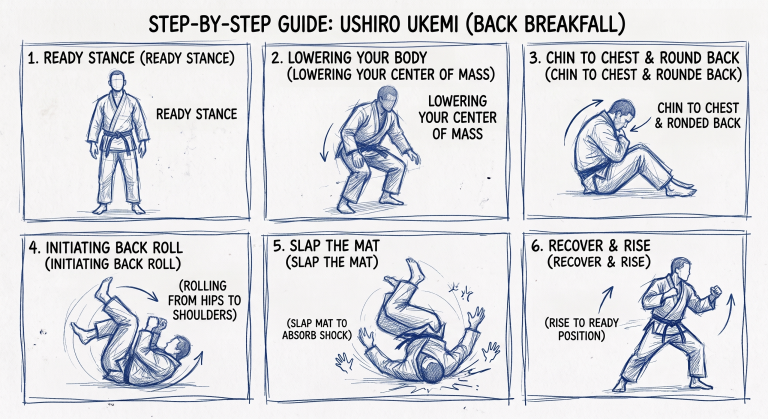
After that, add side falls (yoko ukemi) and controlled backward falls (ushiro ukemi). Only try high throws and dynamic tobi ukemi when you’re protecting your head, slapping the mat every time, and popping back up. Always train with someone experienced, and take it slow—no need to rush and risk injury.
Progressing to Tobi Ukemi Techniques in BJJ
Start with simple, slow drills and gradually build up to higher, more dynamic falls. Focus on using your shoulder to cushion, rotating your hips, and nailing the timing, so when someone throws or sweeps you, you’re ready for it.
Step-by-Step Guide to Soft High Falls
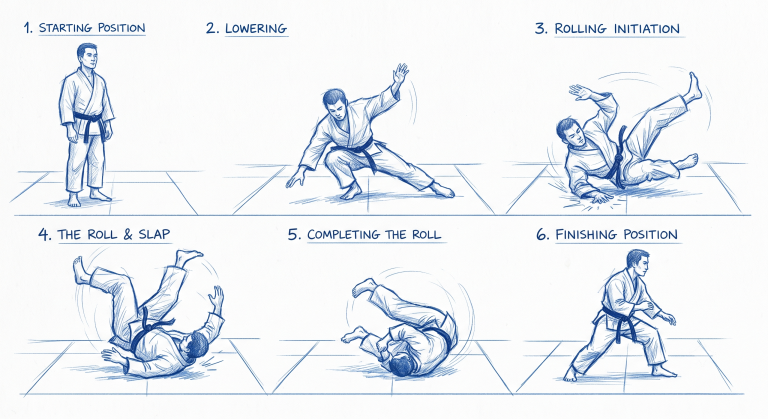
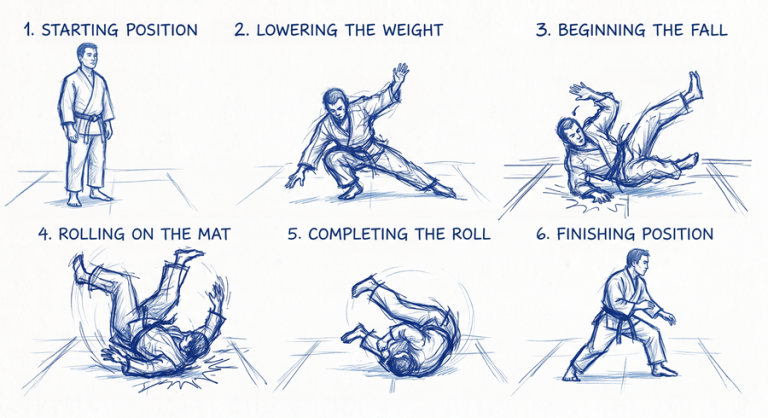
Begin on your knees. Tuck your chin, round your upper back, and aim to land on the side of your shoulder and upper back—not your head. Use your hips and push off with your feet (or let your partner’s momentum help) to get a bit of controlled height.
Move up to standing step-ins. Have a teammate (tori) give you a light push or throw, and really commit to the fall. Try to land on the meaty part of your shoulder and scapula, keeping your arm across your chest to spread out the impact.
Add a half-rotation (kaiten) so you’re rolling through, not just slamming. Practice short forward projections (oten) that can roll into a soft forward roll (kūten) if you need to bail out. Keep increasing the speed, but never skip the chin-tuck and shoulder landing—it’s easy to get sloppy once you’re comfortable, but that’s when injuries happen.
Developing Body Control and Confidence
Isolate different parts: shoulder impacts, hip drives, breakfalls from low heights. Use mats, have a coach guide your back, and just keep repeating until it feels natural. That’s what worked for me—honestly, it took months before I could do this without overthinking every step.
Work on timing with a partner. Start with predictable pushes, then work up to light throws and sweeps during BJJ sparring. This gets you ready for uke-to-nage transitions, where you have to take a projection without locking up or bracing.
Add some mobility and strength work: shoulder flexibility, thoracic rotation, and core bracing. These are what let you handle bigger throws and control the kaiten rotation. Only increase fall height when you’re landing soft every time—don’t skip steps.
Want to go deeper? I recommend checking out bolojiujutsu.com—they’ve got solid breakdowns and resources for BJJ practitioners. For a more detailed look at breakfall progressions, you might find their breakfall drills for BJJ article super useful. Trust me, these resources made a difference in my own journey.
Adapting Tobi Ukemi for BJJ Scenarios
Let’s talk about how to actually use the soft high fall in everyday BJJ—think partner takedowns, double-leg finishes, and those classic hip throws. When your opponent goes for a throw, instead of stiffening up or fighting the momentum, try stepping into it. Honestly, that little shift changed the way I recover guard and avoid injury. It took me a good six months of drilling before it started to feel natural, so don’t stress if it’s awkward at first.
Another thing that helped: practicing how to fall while keeping your posting or framing arm safe. Tuck that hand in, or if you’ve got to slap the mat, do it with an open palm—otherwise, your wrist can take a beating. Sometimes, if you’re thrown with enough force that you can’t just land on your side, a short forward roll (kūten or mae mawari ukemi) gets you out of trouble. It’s not always pretty, but it works.
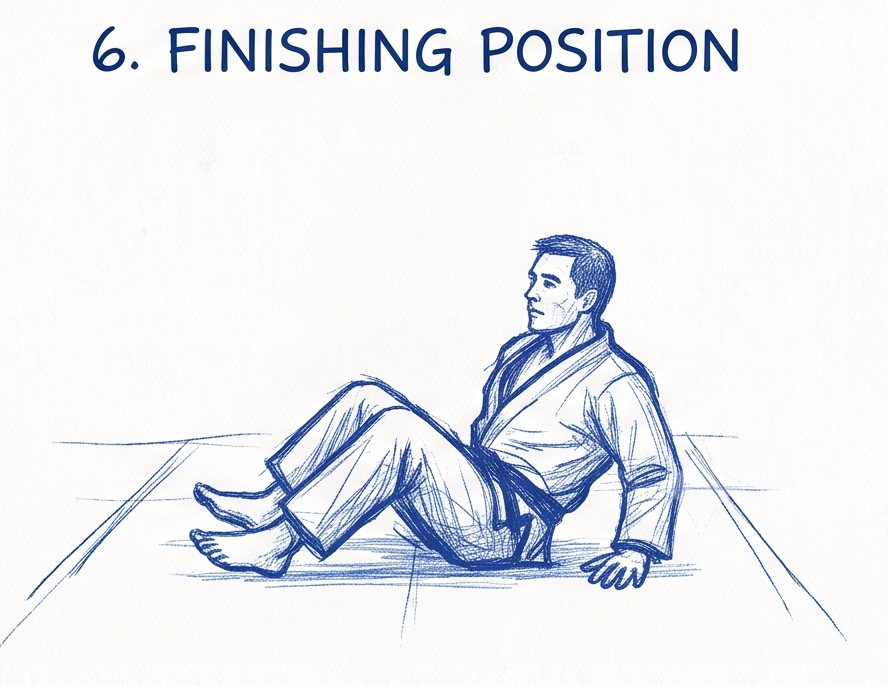
After a tobi ukemi, don’t just lie there. I always drill rolling to my knees, fixing my posture, or scrambling right back to guard. That way, the fall isn’t the end of the exchange—it’s just another part of the flow. If you want to see more on this, check out some practical guides like How to Fall Without Getting Hurt: 3 BJJ Breakfalls (Ukemi Guide) or dig into the resources at bolojiujutsu.com—they’ve got plenty for folks serious about BJJ safety and progression.
By the way, I found this Ultimate Guide to BJJ Ukemi & Breakfall over at bolojiujutsu.com super helpful when I was still figuring all this out. If you’re struggling, you’re not alone. Stick with it, and your body will thank you later.