Step by Step Ushiro Ukemi (Safe Backward Falls) in BJJ
As someone who has spent years on the mats training and coaching Brazilian Jiu-Jitsu, I know firsthand that learning to fall safely is the most critical skill you can develop. I still vividly remember my early days as a white belt, making the rookie mistake of not tucking my chin during a throw, and my head met the mat in a way I wouldn’t recommend to anyone. That painful lesson taught me why ushiro ukemi (the backward breakfall) isn’t just a mundane warmup drill—it’s your absolute first line of defense against concussions and spine injuries.
In this guide, I’ve distilled years of practical mat experience and coaching insights into a straightforward, step-by-step process. Whether you’re a day-one beginner terrified of being swept or an experienced grappler looking to refine your breakfall mechanics, getting the sit-down motion, chin tuck, hand slap, and footwork right is non-negotiable. I’ll walk you through the exact solo drills, partner work, and common mistakes we fix in our own gym every day, so you can train with confidence and keep yourself—and your training partners—out of the ER.
Fundamentals of Ushiro Ukemi
Let’s get into what Ushiro Ukemi actually is, why it matters right at the start of BJJ training, and the core principles that make a backward breakfall work. It’s really about body position, timing, and a few key habits you need to drill.
What Is Ushiro Ukemi
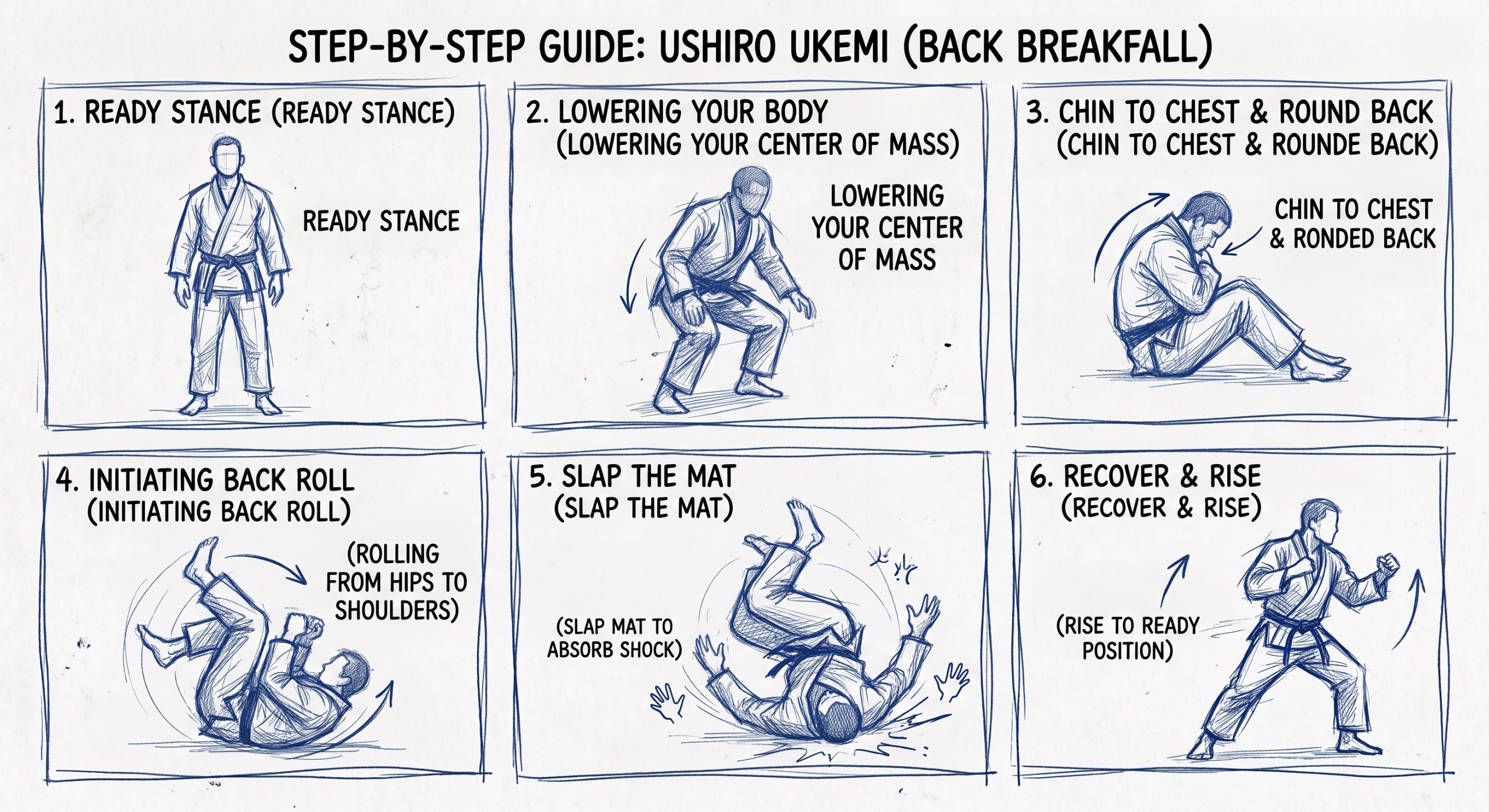
Ushiro ukemi is the backward breakfall you use to absorb momentum and protect your head, neck, and spine when you’re thrown or swept. You start low, tuck your chin hard to your chest, and sit back with intention before your back hits the mat. That’s how you avoid a nasty head impact.
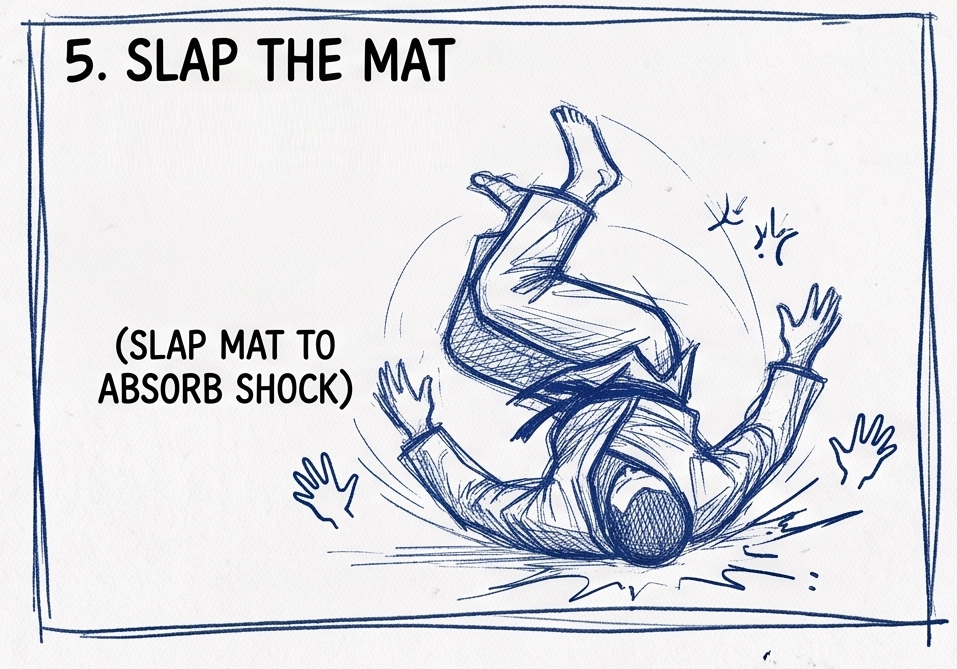
When your back touches down, slap the mat with both arms at about a 45° angle. This spreads out the force across your shoulders and torso. At the same time, bend your knees and slap your feet down so your legs help share the impact. It’s a sequence: sit, chin tuck, back hits, arms slap, feet slap. Drill it solo, slide on the mat, or do tiny drop-backs until it’s second nature.
Significance in Beginning BJJ
Ushiro ukemi is usually the first breakfall you’re taught because it kills the fear of falling and builds basic body awareness. In BJJ, if you can’t fall safely, you’re going to hesitate every time someone sweeps or throws you—and that’s a recipe for injury. If you can’t protect your head and neck, you really can’t move on to live throws or rolling.
It also sharpens your sense of timing. You start to feel when to sit back and how to turn that energy into a safe landing. That confidence makes a huge difference, both for your safety and your partner’s.
Principles of Effective Breakfalls
Chin tucked, body rounded—this keeps your head off the mat and spreads out the force. Don’t just flop. A good breakfall is active; you’re doing the movement, not letting it happen to you. Your arms need to slap the mat like you mean it. If you’re too gentle, you’ll feel it in your joints the next day.
Timing is everything: sit first, then fall. If you hesitate or lean back too early, you’ll hit the wrong spots and risk injury. Try to stay relaxed until impact, then tighten up for the slap to send force into the mat. Practice both sides. Start slow, then ramp up speed and height as you get it down. If you want more visuals, check out the detailed guides at bolojiujutsu.com.
Practical Techniques and Step-by-Step Execution
Let’s get practical: prep your body, set up your posture, move with control, and fix the stuff that trips most people up. Chin tucked, limbs relaxed, core tight, and a slap that actually echoes off the mat—these are the things that matter.
Preparing Your Body and Mind
Always start with a quick warm-up—5 to 10 minutes of neck rolls, shoulder circles, hip swings, and wrist mobility. Warm muscles don’t get shocked as easily, and your slaps will sting less (in a good way) when you hit the mat practicing ushiro ukemi or other breakfalls.
Mentally, try to stay loose and ready to react. If you freeze, you’ll land stiff and that’s when things go wrong. Picture the steps: sit back, chin down, back touches, hands and feet slap together. Go slow at first, then build up speed as you keep your form.
Work your way up: start from sitting or kneeling, then try a gentle backward push from standing. Partner drills help bridge the gap to live rolling. And please, only do this on real mats—your living room rug won’t cut it.
Proper Positioning and Posture
Set your feet about shoulder-width apart before you start. That way, you can actually sit back onto your hips instead of just collapsing. Keep your knees a bit bent—this lets your hips take some of the load and keeps your spine from getting jammed.
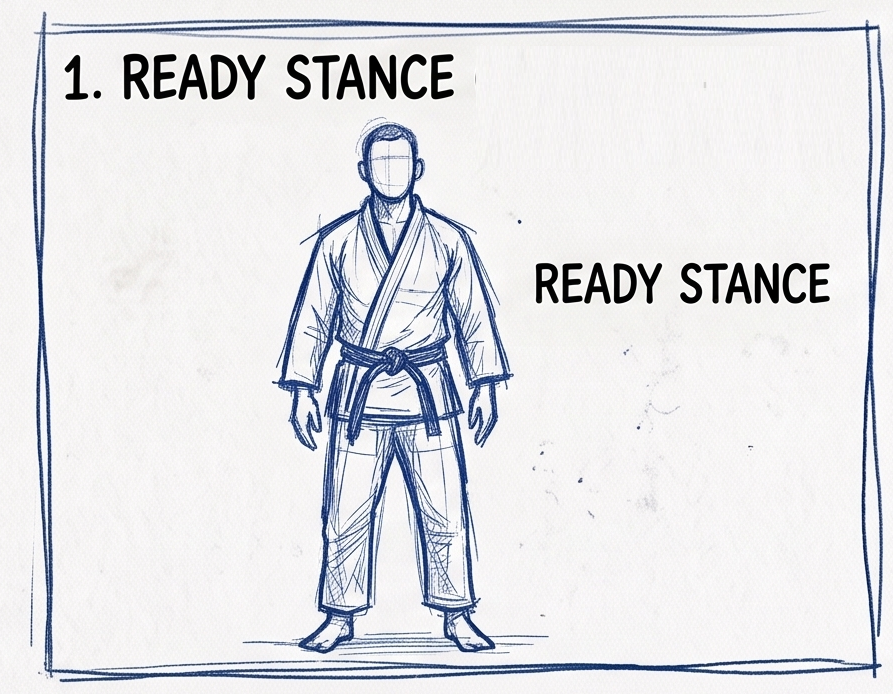
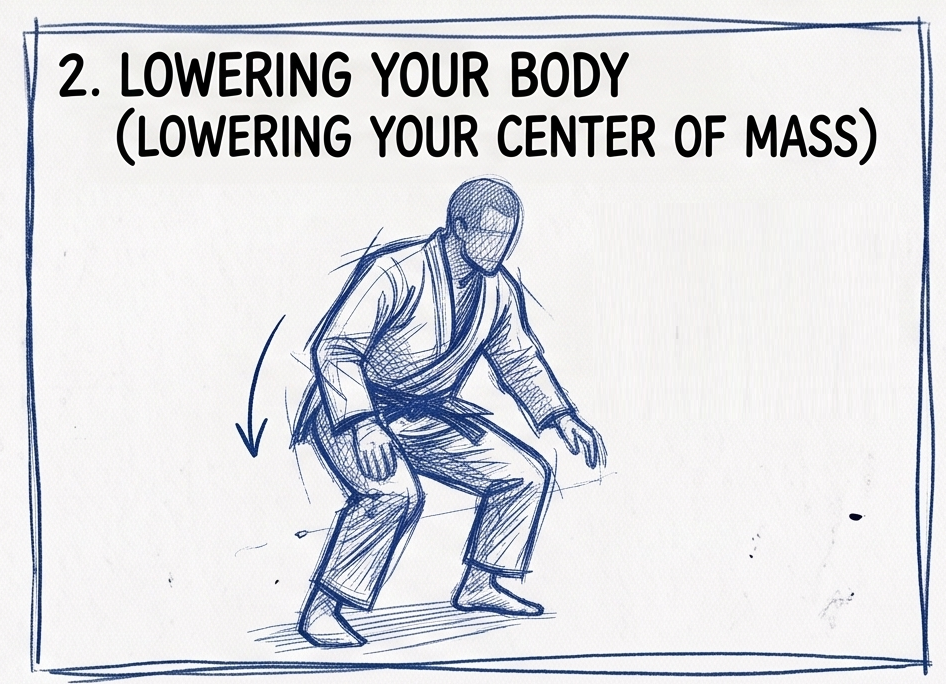
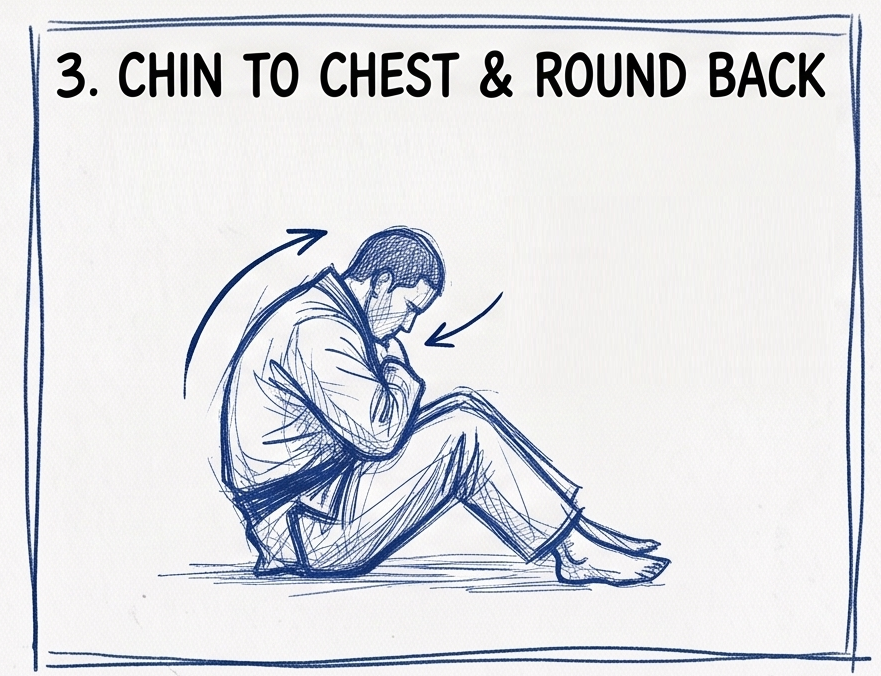
Chin down, no exceptions. Don’t let your head hit. Shoulders rounded, not arched. Arms out at about 45°, elbows bent, hands open and ready to slap.
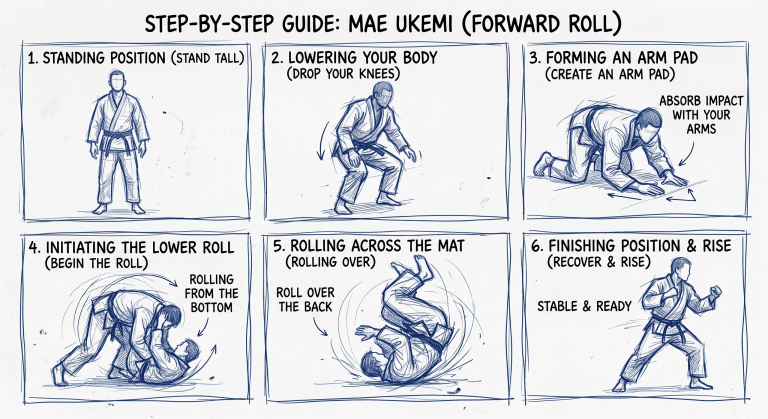
Brace your core to control the descent. Try to hit the mat first with your upper back and shoulders, not your head or tailbone. This spreads the energy and actually matches the mechanics you’ll use in other breakfalls, like the forward roll. If you want more on posture, check this article on BJJ breakfall basics.
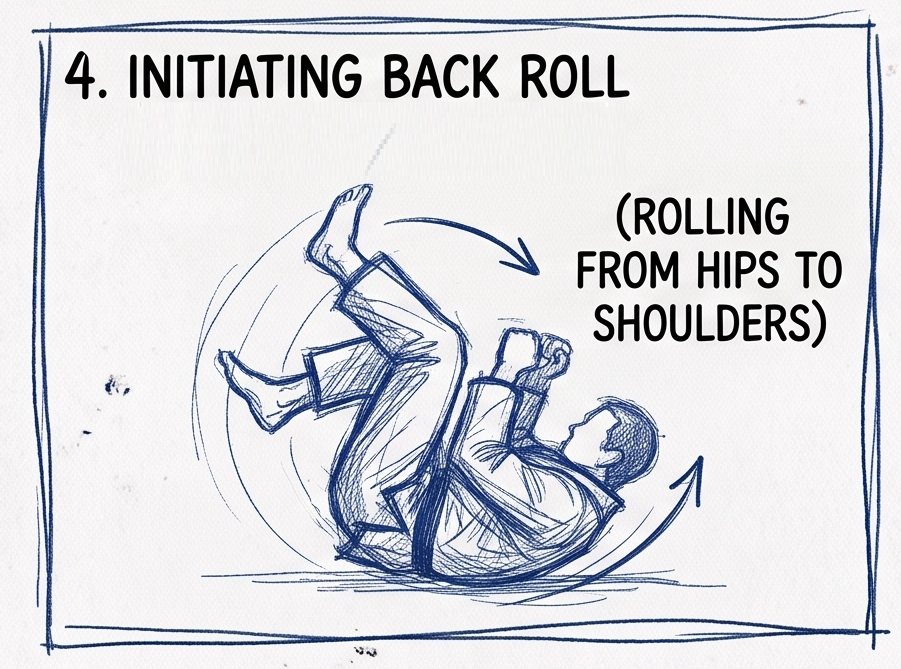
Executing the Backwards Fall Safely
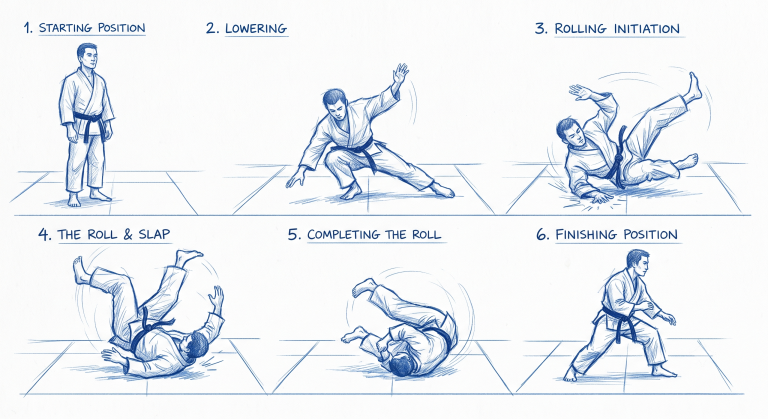
Shift your weight back as if you’re sitting into a low chair—don’t just flop. Move with intention: sit first, then roll—not just a dead fall. When your back hits, slap the mat with both forearms and palms at the same time. If it’s loud, you’re probably doing it right.
Time the slap with a quick core contraction and a little stomp of the feet. That combo spreads the impact through your limbs and feet, which saves your spine and shoulders. Keep your elbows a bit off the floor so you’re taking the hit with your forearms, not the joints.
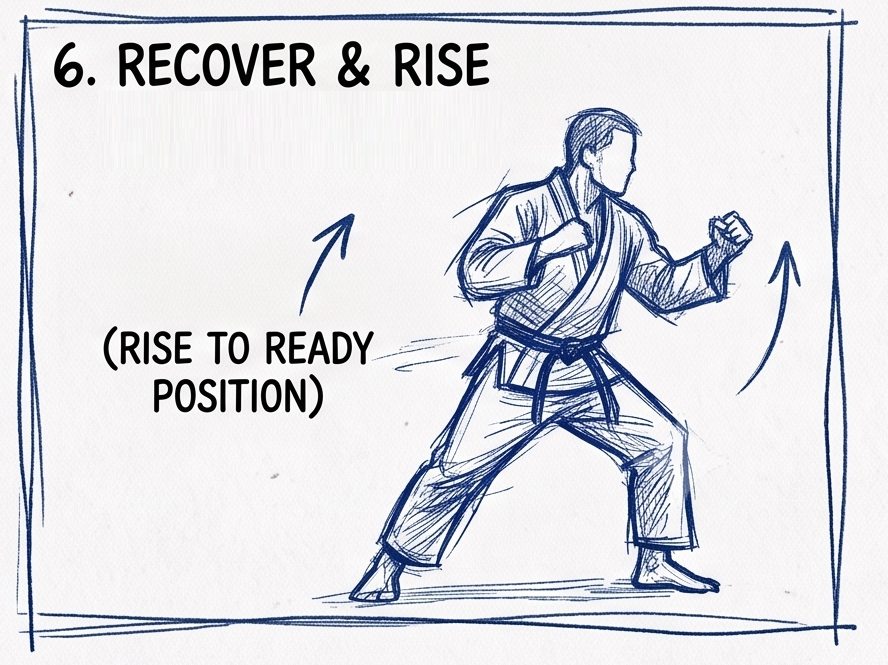
After the slap, let your knees come up toward your chest for a moment, then extend or roll back up to ready. Repeat until it feels automatic, then try it faster or with a partner giving you a bit of a push. It might not be perfect at first—nobody’s is—but you’ll get there.
Common Mistakes and Corrections
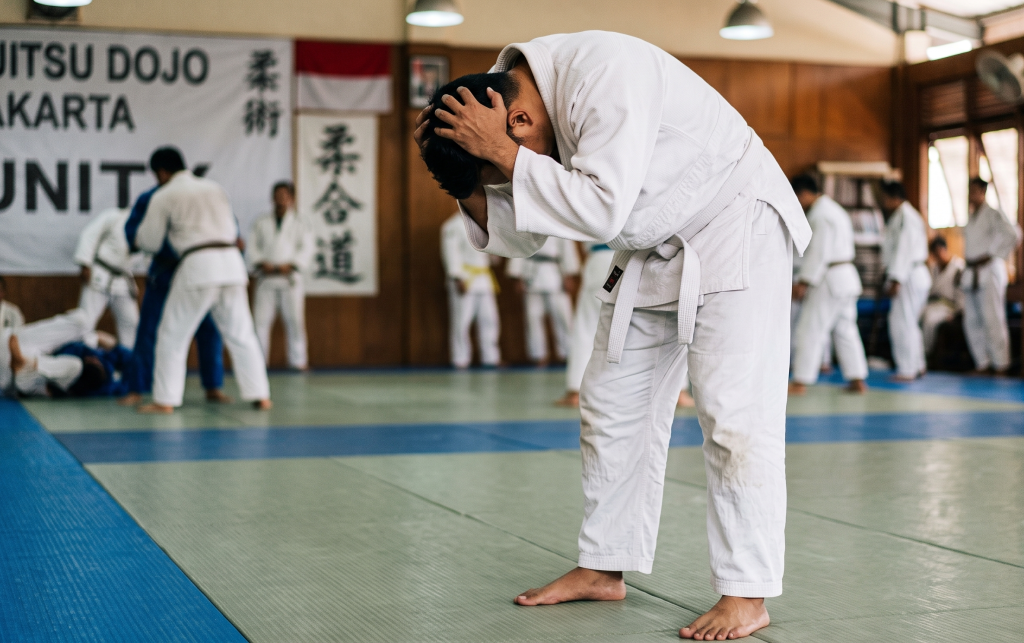
Mistake: tensing or bracing the neck. Fix: Try chin-tuck drills standing against a wall, and let your breath out as you start to sit back. It helps you stay loose. Keep the reps short and frequent—honestly, this is one of those things you only realize you’re messing up after you’ve smacked your head once or twice. If you want to dig deeper into breakfall safety, check out bolojiujutsu.com.
Mistake: weak or late slap. Fix: Work on crisp, intentional mat slaps from a low position. Sometimes it’s worth recording yourself or asking a partner to watch—timing is everything. Focus on hitting the mat with your hand right as your core engages. It’s awkward at first, but you’ll get it.
Mistake: incomplete rollback or landing on the tailbone. Fix: Slow-motion reps and wall-supported backward rolls can help you break the habit. Remind yourself to lead with your shoulders instead of your hips. It’s not about speed; it’s about control.
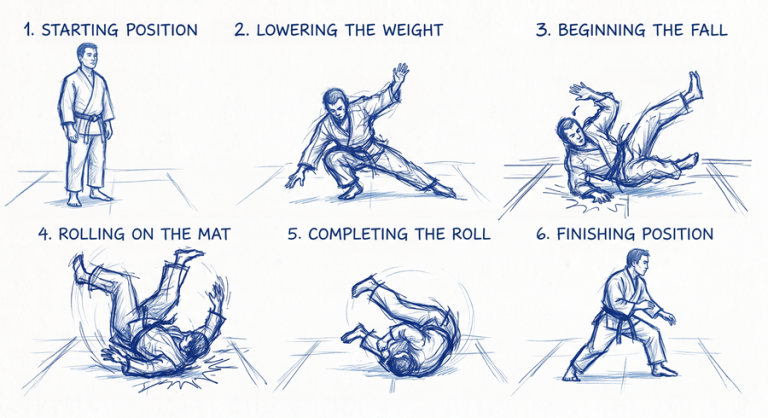
Mistake: favoring one side for side breakfalls or skipping forward rolls. Fix: Make your ukemi training even—give equal time to ushiro, yoko, and mae ukemi. That way you won’t end up with a glaring weak spot everyone can see coming. For more on balancing your BJJ fundamentals, you might find this article on bolojiujutsu.com genuinely useful.