How To Do Zenpo Kaiten Ukemi Step by Step
Getting thrown in martial arts like BJJ, aikido, or ninjutsu can get risky if you’re not sure how to land. Zenpo Kaiten Ukemi is a forward rolling breakfall that distributes the impact of a throw across your shoulder blade and diagonally toward your opposite hip—helping you avoid injury. You’ll see this technique a lot in live training, but honestly, it can feel a bit dizzying at first.
To really get this rolling breakfall down, you need to understand the mechanics that make it work. It’s all about body position and making sure your shoulder—not your neck—makes contact with the ground. I’ll walk you through how to actually do the technique, and why it’s so crucial for your safety. For me, it took around six months to really nail this. The first few weeks were just me tumbling awkwardly, but once it clicked, it completely changed my confidence in sparring.
Whether you’re new to martial arts or pushing for your next belt, strong ukemi skills will change how you train. Let’s break down the key principles of the forward roll and look at ways to blend different breakfall styles into your routine. If you want more context on BJJ breakfalls, check out bolojiujutsu.com—there’s a lot of practical advice there, and I’ve found their guides super helpful.
Core Principles and Execution of Zenpo Kaiten Ukemi
The forward roll depends on good mechanics and getting your shoulder blade in the right spot. If you don’t get the diagonal path right, things just don’t work. Avoiding the classic mistakes is key if you want to make this ukemi second nature.
Essential Steps for a Safe Forward Roll
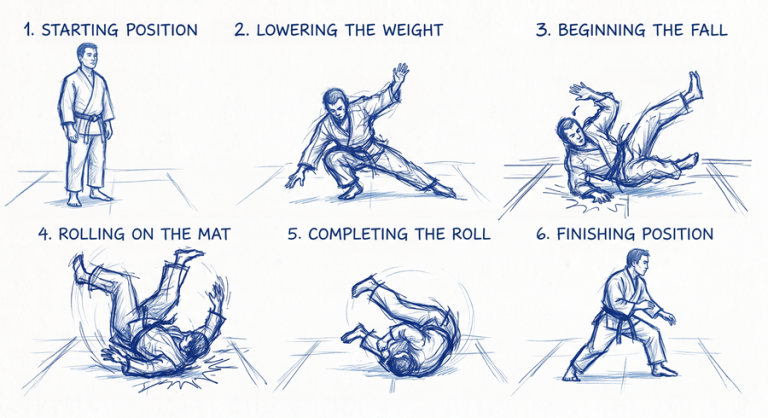
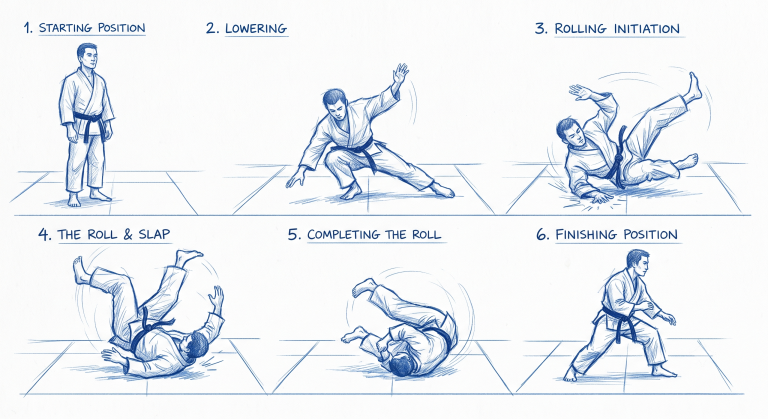
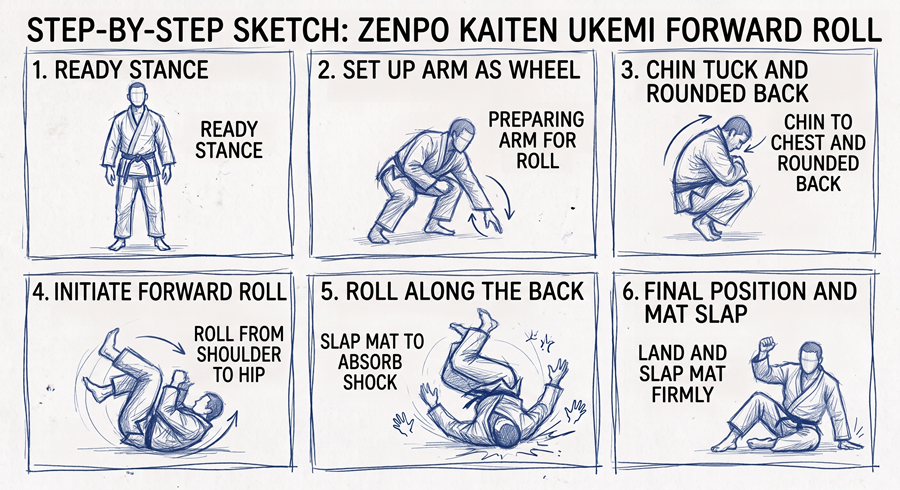
Start with one leg forward in a low stance. Your lead arm should reach diagonally across your body, aiming for the opposite hip.
The big thing here: make contact with your shoulder blade, not the joint or your neck. The roll should move diagonally from the back of your shoulder to the opposite hip, spreading out the impact along your back.
As you roll, tuck your chin to your chest so your neck stays safe. Let your extended arm guide you, and slap the ground with your other hand to help control momentum. Try to keep the roll smooth and continuous. Ideally, you’ll finish in a kneeling or standing position, ready to move again.
Honestly, practice this on soft mats before you try harder surfaces. Keep your body rounded throughout to keep the roll going. It’s awkward at first, but it gets smoother with time.
Common Mistakes to Avoid During Practice
Rolling over your neck instead of your shoulder blade? Don’t do it. That’s the fastest way to hurt yourself—usually happens if your head’s in the wrong spot or you start too straight.
Another thing: a lot of beginners roll straight forward, but this technique needs a diagonal path. Straight rolls put too much pressure on your spine and don’t spread the force out.
If you land flat on your back or with a loud thump, your body isn’t rounded enough. A good roll is quiet, smooth, and there’s no single spot taking the brunt of the fall.
Don’t hold your breath! Exhale as you go. Stiff muscles just make the whole thing harder and riskier.
Drills and Training Tips
Start with basic prep drills. Rock back and forth on your rounded back—seriously, it helps you feel what the right shape is. That curved position is everything.
Switch up your starting positions. Begin from a squat, then kneeling, and finally standing. You can also practice zenpo kaiten from different stances—it makes you more adaptable.
Work both sides. Most people have a favorite, but you need to be able to roll over either shoulder. Try to get comfortable both ways—it’ll pay off, trust me.
Progression I Used:
- Roll on padded mats (Week 1-2)
- Roll from squat (Week 2-3)
- Roll from kneeling (Week 3-4)
- Roll from standing (Week 4+)
- Gradually increase speed
- Move to firmer surfaces once confident
Comparison With Other Breakfalls
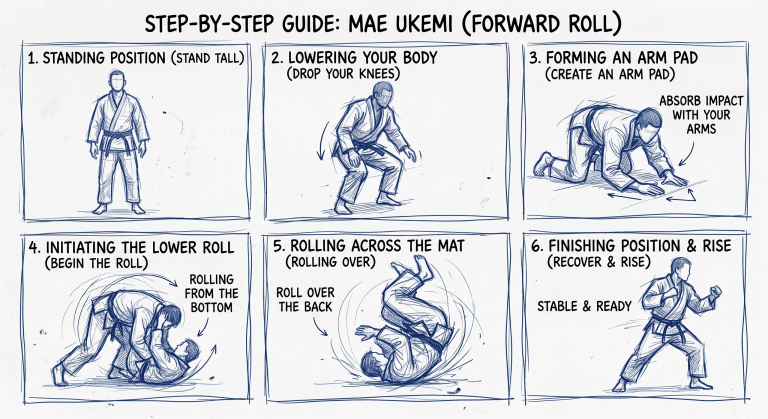
Zenpo kaiten ukemi is pretty different from basic mae ukemi, which is just a straight forward fall without the roll. The rolling version spreads out the impact more—honestly, it feels safer once you get it right.
Yoko ukemi (side breakfall) is all about landing on your side and slapping the mat. You stay flat, while zenpo kaiten keeps you rounded through the roll.
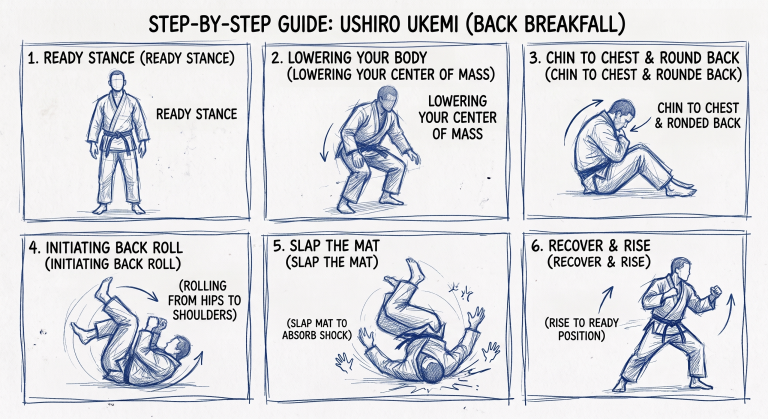
Back breakfalls are a whole different thing—you stay on your back as you fall. The forward roll actually lets you get back to your feet right away, which is huge for keeping up with fast-paced training.
| Breakfall Type | Direction | Body Position | Recovery |
|---|---|---|---|
| Zenpo Kaiten | Forward diagonal | Rolling/curved | Stand immediately |
| Mae Ukemi | Forward | Extended | Prone position |
| Yoko Ukemi | Sideways | Flat on side | Side position |
| Ushiro Ukemi | Backward | Curved back | Supine position |
The forward roll’s a bit trickier than the basic breakfalls but gives you more mobility after. Being able to chain rolls together makes this technique a must-have for dynamic martial arts like BJJ. If you want a deeper dive into BJJ-specific breakfalling, I really recommend reading this article on breakfalling in BJJ—it helped me a lot when I was struggling to get consistent rolls.
Integrating Breakfall Variations Into Martial Arts Training
Different breakfall styles have their own uses in martial arts, and knowing when to use which one is part of building a real defensive game. Side breakfalls and forward rolls both come up, depending on how you’re thrown and what’s happening on the mat.
Contrast Between Yoko Ukemi and Zenpo Kaiten Ukemi
Yoko ukemi is about absorbing impact when you fall sideways. You land on your side, slap the mat at an angle, keep your legs straight, and your head tucked away.
Zenpo kaiten ukemi is a diagonal roll across your back. You start from standing or kneeling, roll from one shoulder to the opposite hip, and keep a curved line through the roll. It’s more about carrying momentum forward.
The side breakfall stops your motion cold. The forward rolling breakfall keeps you moving and lets you get back up fast. Side breakfall’s for direct side throws; zenpo kaiten is for forward momentum or when you need to escape and reset.
Application Scenarios in BJJ and Ninjutsu
In BJJ, you really need solid ukemi, including rolling falls, before you can safely spar. The forward rolling breakfall protects you from throws that send you tumbling forward—hip throws, sweeps, you name it. You’ll use it a ton during live rounds.
Zenpo Kaiten Ukemi has a couple of different versions in Ninjutsu. One’s focused on speed, for quick escapes. The other’s about silent movement for tactical stuff. Both keep you safe from forward falls and let you keep your eyes on what’s happening around you.
Main differences in use:
- BJJ and judo emphasize mat slapping and controlling momentum
- Ninjutsu goes for quieter landings and fast recovery
- BJJ uses it constantly during throwing and live drills
- Ninjutsu adapts it for obstacle navigation and evasion
Progression for Beginners and Advanced Practitioners
Basic skills such as ukemi to zempo kaiten are honestly the bedrock before you even think about moving on to more complicated stuff in BJJ. I remember when I started, it took me a good six months before these movements felt natural—seriously, it’s not as easy as it looks in those slick YouTube demos. You begin with static rolls from your knees. The instructor’s always watching your shoulder angle, making sure you don’t flop sideways or twist your neck weirdly. You’re supposed to roll diagonally across your back, and trust me, you’ll feel it when you get it right.
After that, you get up and try from standing, one foot forward. Lead hand on the mat, then you sort of push off and roll forward. It’s all about controlling your momentum—if you hesitate, you’ll just land in a heap. There’s a certain rhythm to it that only clicks after a lot (and I mean a lot) of tries.
Once you’re not thinking about the basics anymore, you start mixing zenpo kaiten into actual throws and live sparring. Sometimes you have to change direction mid-roll, or you’re thrown and need to recover straight into guard or scramble back to your feet. After months of drilling, breakfalls just happen automatically—you don’t really think about the steps anymore. It’s wild how your body just knows. If you want to read more about practical BJJ progression, I’d recommend checking out bolojiujutsu.com—there’s a great article on the importance of ukemi in BJJ that really helped me refine my own training approach.