How Long Do BJJ Rash Guards Last
How Long Do BJJ Rash Guards Last? You train hard and want gear that keeps up. With normal, regular training and proper care, a quality BJJ rash guard will typically last about two to three years before compression and fabric integrity decline noticeably. As practitioners and coaches with years of experience in Brazilian Jiu-Jitsu, we understand the importance of reliable gear for both safety and performance.
Expect a well-made rash guard to give you roughly 1–3 years of reliable use with regular training, and longer if you follow proper washing, drying, and storage practices.
This article will guide you through the factors that impact rash guard lifespan, expert care steps to maximize durability, and clear signs it’s time to replace your rash guard—so you always have top-level protection and comfort on the mats. For recommendations on top-performing gear, check out our guide to the best rash guards for BJJ.
Factors Affecting the Lifespan of BJJ Rash Guards
Different design choices and how you use the rash guard determine how long it stays functional. Material density, seam quality, training frequency, and whether the shirt fits correctly all directly affect durability, compression performance, and resistance to mat wear. Our team has tested and reviewed dozens of rash guards in real training environments to provide you with insights based on hands-on experience.
Fabric Quality and Material Composition
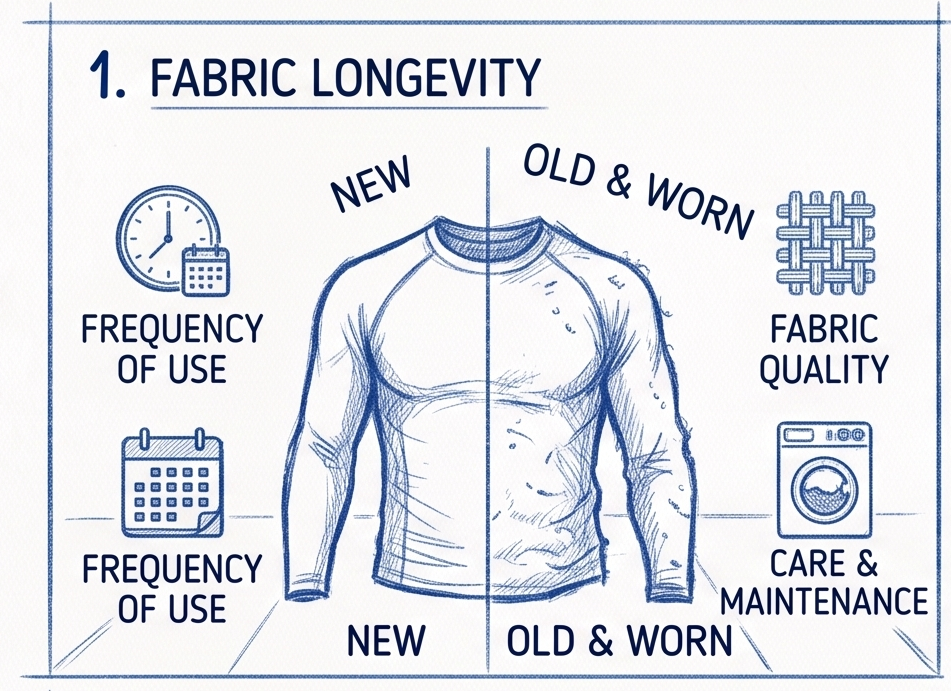
The fabric blend sets the baseline for longevity. Look for high polyester or nylon content combined with elastane (spandex) for four-way stretch and compression that keeps shape session after session. Higher GSM (fabric weight) generally resists abrasion from grips and mat contact better than thin blends, so a denser moisture-wicking fabric will keep its integrity longer.
Pay attention to treatments: antimicrobial finishes delay odor buildup, and durable water-repellent coatings can reduce mat-dust absorption. Avoid low-cost polyester blends that pill or lose elasticity after repeated washes. Brands that list exact fiber percentages and GSM help you compare expected durability.
Stitching and Construction Standards
Seam type and stitch density matter as much as fabric. Flat-lock stitching reduces chafe and spreads stress across the seam, so it’s less likely to split under pressure from grips or scrambles. Double-stitched hems and reinforced panels at shoulders and underarms resist tearing where pressure concentrates.
Check for consistent stitch spacing and no loose threads; those are early failure signs. Panels joined with overlap and bar-tacks at stress points outperform single-needle seams. If you want a visual cue, inspect inside the rash guard for tidy, even flatlock seams and extra reinforcement where fabric meets compression panels.
Frequency and Intensity of Training
How often you train and the style you roll in accelerate wear. Training 3+ times per week with heavy grip fighting or live rounds puts constant friction and bodyweight pressure on the fabric, shortening the useful life to perhaps 1–3 years for mid-range rash guards. Light technique sessions or weekly training can extend lifespan to multiple years.
Competition-level intensity, constant mat contact, and frequent exposure to sweat increase breakdown of fibers and stitching. Wash and dry practices compound the effect: frequent hot washes, tumble drying, or bleaching degrade elastane more quickly than cool, gentle laundering.
Proper Fit and Mobility Considerations
Fit affects both comfort and durability. A properly compressive jiu jitsu rash guard should sit snug without pulling at seams during full extension; excessive stretch at shoulders or chest indicates under-sizing and leads to seam strain. Conversely, baggy rashguards bunch and create extra abrasion points against the mat.
Choose a cut that matches your movement—raglan sleeves or articulated panels improve mobility and reduce seam stress during shoulder rotation. If compression shirts ride up or restrict breathing, you’ll alter how you move and unintentionally stress fabric. Prioritize a fit that maintains compression and full range of motion without forcing seams to carry unnatural loads.
Best Practices for Maximizing Rash Guard Durability
Keep garments smelling fresh, maintain compression and breathability, and protect fabric integrity by using gentle handling, low temperatures, and avoiding harsh chemicals. These practices are recommended by both leading manufacturers and experienced BJJ athletes to ensure your rash guard stays in peak condition.
Correct Washing Techniques
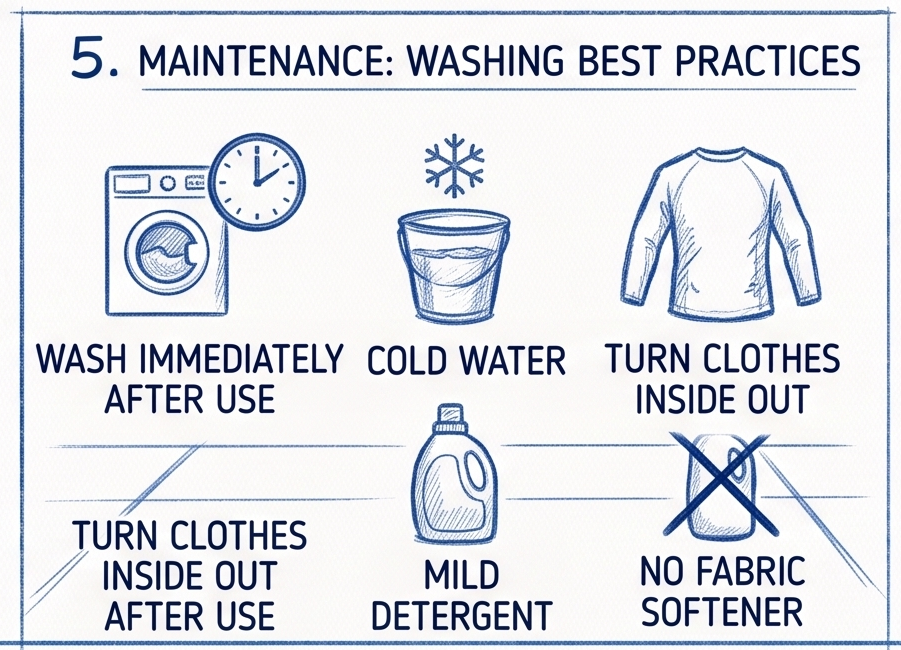
Wash your rash guard immediately after training to remove sweat, salt, and bacteria that break down fibers. Turn the garment inside out and fasten any closures to protect prints and seams.
Use cold water and a gentle cycle when machine washing; cold water preserves elasticity and dye. If you prefer hand washing, soak for 5–10 minutes in cool water and lightly agitate—avoid vigorous scrubbing that stresses the weave.
Wash rash guards separately or with similar technical fabrics to prevent abrasion from zippers or heavy cotton. Skip fabric softeners and bleach; they degrade moisture-wicking finishes and reduce compression over time. Aim for a wash frequency of after every session to protect breathability and prevent odor buildup.
Drying Methods That Preserve Fabric
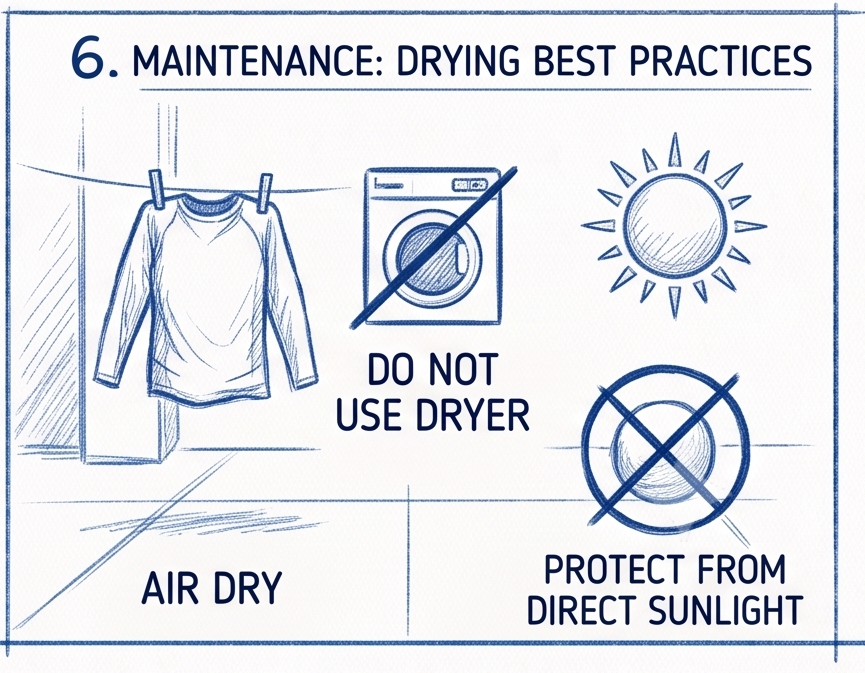
Air drying remains the safest option to keep your rash guard’s compression and shape. Lay the rash guard flat on a drying rack or hang it by the torso rather than the shoulders to avoid stretching the seams and collar.
Keep it out of direct sunlight; UV exposure fades prints and weakens synthetic fibers. If you must use a dryer, choose the lowest heat or an air-only cycle and remove the garment while slightly damp to finish air drying.
Avoid wringing or twisting a wet rash guard—press it gently between towels to remove excess water. High heat will shrink or warp moisture-wicking fabric and damage elasticity, shortening the effective life of your compression shirt.
Detergent Choices and Chemical Exposure
Select a mild, pH-neutral detergent formulated for synthetic or sports fabrics to protect moisture-wicking coatings. Use a small dose—excess detergent can leave residues that trap odors and reduce breathability.
Avoid bleach, oxygen-based whiteners, and chlorine exposure; these chemicals break down spandex and polyester blends used in most BJJ rash guards. Stay away from fabric softeners and scented detergent boosters that coat fibers and diminish compression and moisture transfer.
For persistent odor control, use specialized sports detergents occasionally or add a cup of white vinegar to the rinse cycle to neutralize smells without harming fabric integrity. Test any additive on an inconspicuous spot if you’re uncertain about long-term effects.
Stain Removal and Odor Management
Treat stains promptly to avoid setting. Blot excess residue, then apply a gentle pre-wash solution—liquid detergent or a paste of water and baking soda—directly to the stain and let sit 10–20 minutes before washing.
For protein stains (blood, sweat), soak in cold water; hot water can set protein into the fibers. For oil-based stains, use dish soap sparingly to break down oils without attacking the fabric’s elasticity.
Control odor by washing immediately after use and allowing full air circulation while drying. For entrenched smells, soak in a mix of cold water and one part white vinegar for 30–60 minutes before washing. Do not use chlorine bleach or strong deodorizers; they weaken fabric and remove moisture-wicking properties. For more tips on rash guard care, you can also visit expert resources such as this guide on jiujutsu.com.
Recognizing When to Replace Your Rash Guard
Inspect seams, fabric stretch, color fading, persistent odor, and any skin irritation. Focus on tangible changes you can measure: loss of compression, visible holes, weakened stitching, or smells that don’t leave after proper washing. Our recommendations are based on both personal experience and input from professional athletes and coaches.
Signs of Wear and Reduced Performance
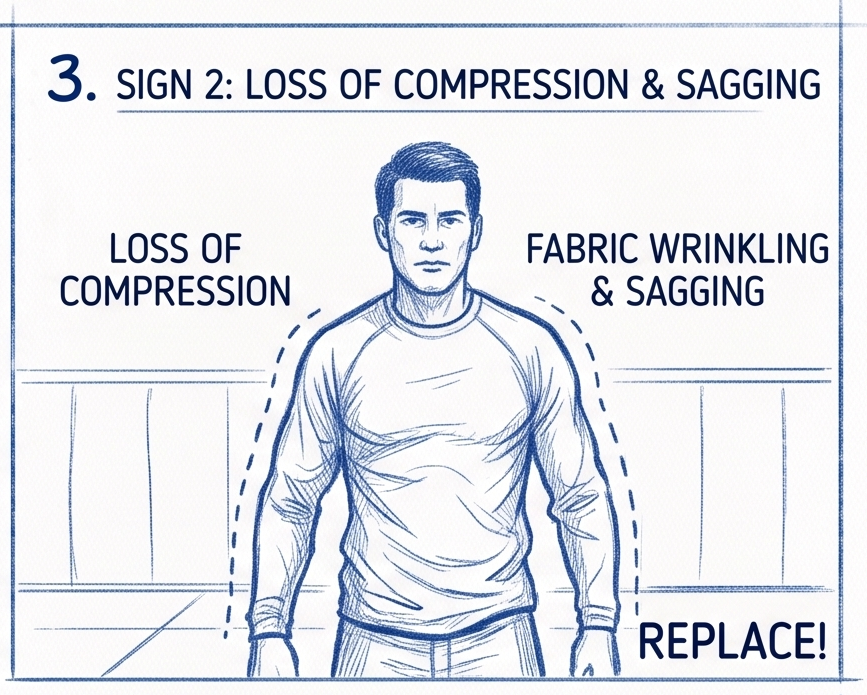
Check compression first. If your BJJ rash guard no longer fits snugly—sleeves gap, torso sags, or the fabric feels loose—its compression profile and support have degraded and it’s time to replace it. Elastic recovery in cuffs and hem gives a quick read: if they stay stretched after you pull them, durability has declined.
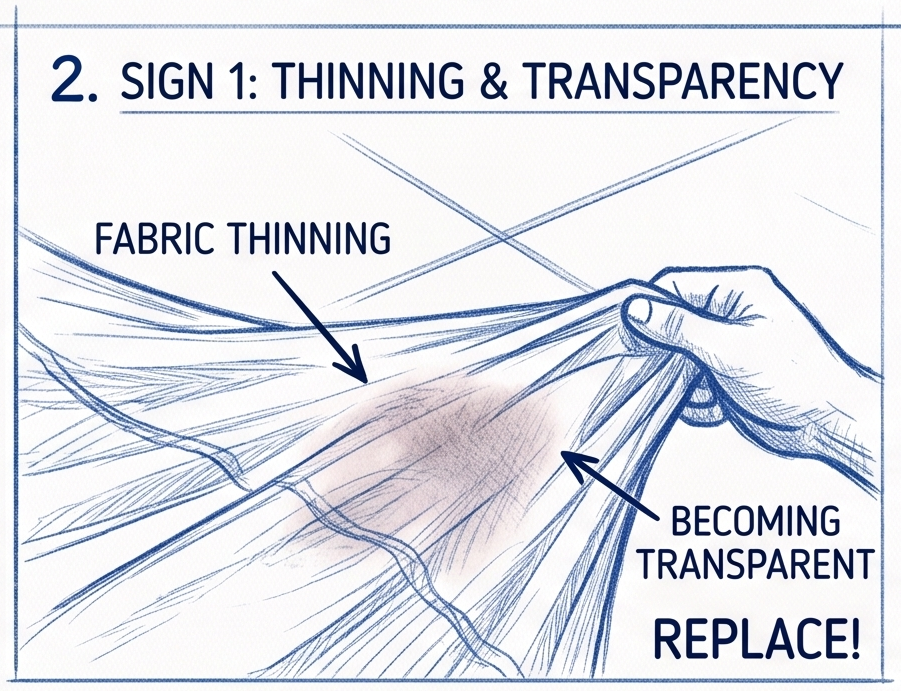
Look for thinning or shiny patches where friction is highest: shoulders, chest, and inner arms. Small snags or tiny holes often grow rapidly under grappling stress. Also examine printed logos and sublimated ink: severe cracking or peeling indicates material breakdown that often precedes structural failure.
Impact of Odors, Stains, and Fabric Breakdown
Persistent odor after cold-water washes and air drying means bacteria have embedded in the fibers or antimicrobial treatments have worn off. Try detergent formulated for sportswear; if the smell returns after one training session, retire that rashguard to avoid skin issues.
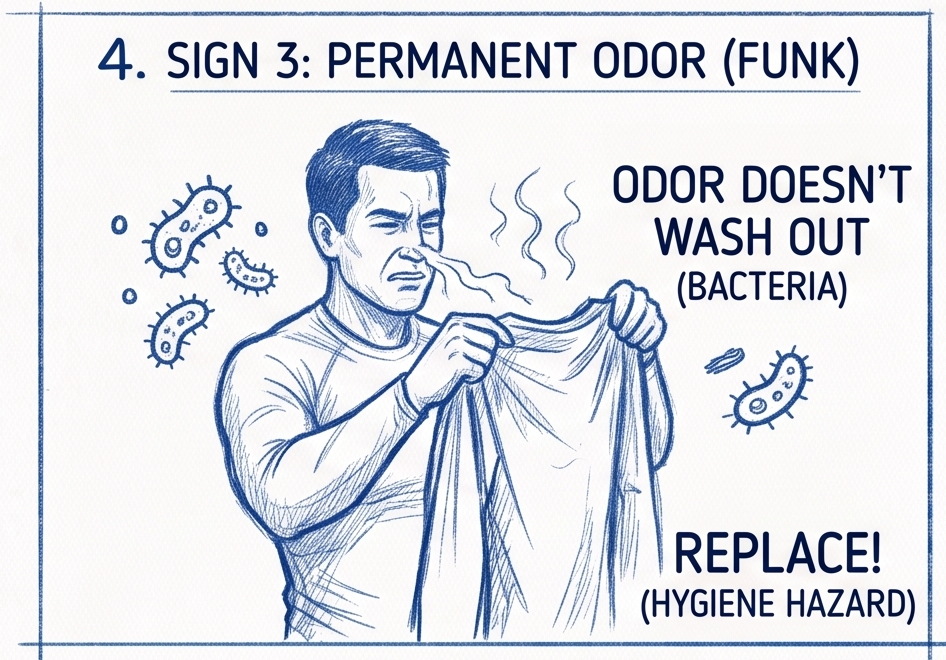
Stains from blood or mat chemicals that don’t lift may indicate fiber damage. Fabric that pills, fuzzes, or develops a rough texture has lost integrity and will deteriorate faster during training. Replacing the rashguard restores performance and prevents contaminants from building up in your BJJ gear.
Hygiene and Safety Considerations
Skin protection is essential for every Brazilian Jiu-Jitsu practitioner. If a rash guard causes itching, redness, or recurring rashes—even after proper washing—discontinue its use immediately. Allergic reactions may occur if dyes or fabric finishes deteriorate; replacing the garment helps eliminate this risk and ensures your safety on the mats.
Seam failure or exposed elastic can lead to abrasions during rolling, while holes not only increase the risk of mat burns but also reduce your protection against bacteria. For training environments that enforce strict hygiene standards, such as competitions or shared academy mats, always inspect your rash guards for visible wear and odor. Investing in high-quality rash guards from reputable brands—especially those specializing in BJJ gear—can help maintain durability and fabric integrity when you follow proper care instructions (cold wash, no bleach, air dry). For a comprehensive guide on choosing reliable gear, check out our article on the best rash guards for BJJ. For additional expert advice on jiu-jitsu apparel and hygiene, visit this resource on jiujutsu.com.